Viagra, Cialis, and the Alternatives: An Honest Comparison for Men Over 40
PDE5 inhibitors work well for most men. But they come with planning requirements, contraindications, and costs that aren't always acknowledged upfront.
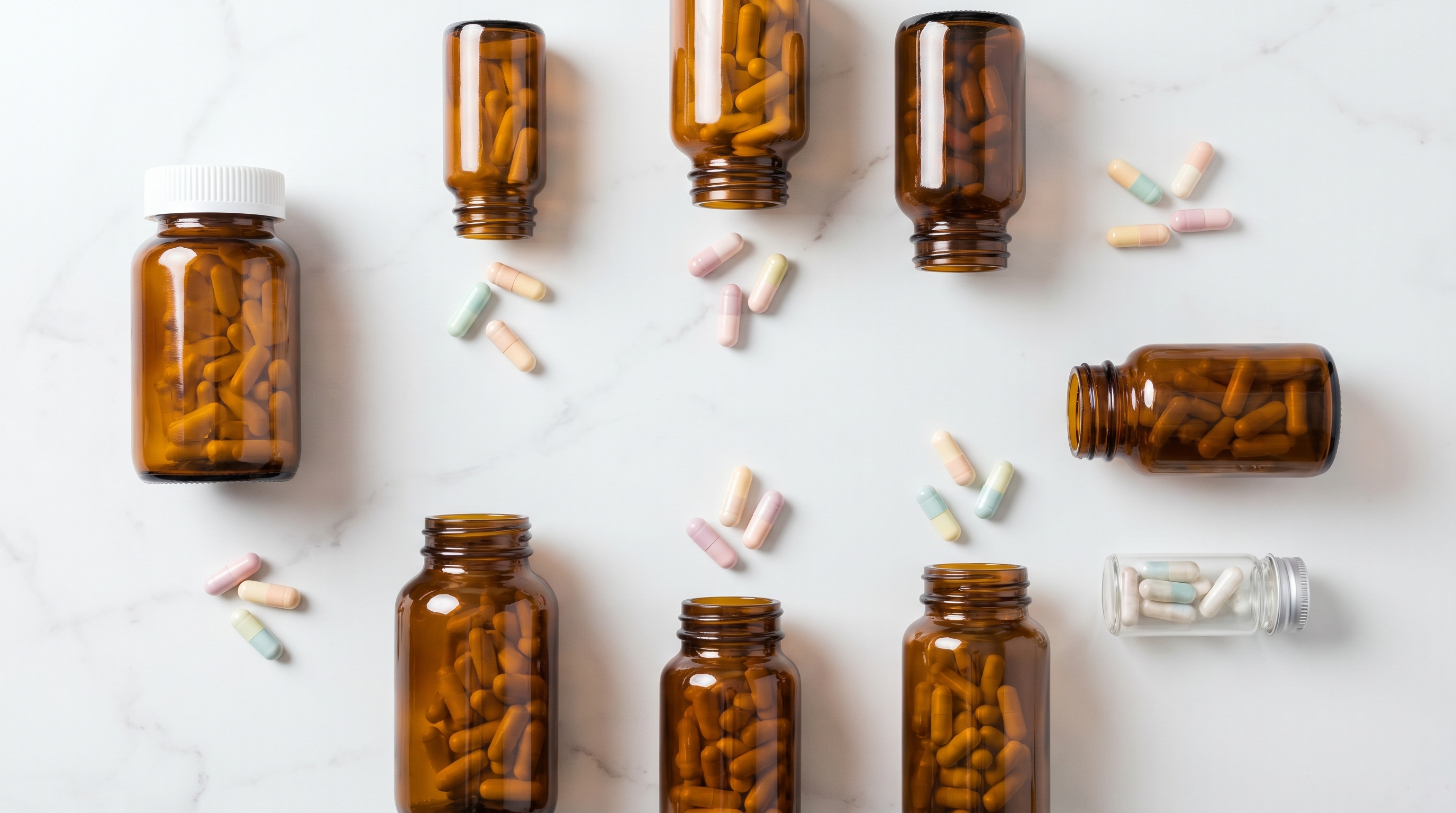
Sildenafil has been on the market since 1998. In 27 years it has become arguably the most recognized prescription drug in the world. The pharmaceutical companies have done an effective job of making "take a pill before sex" feel like the only option worth considering. It isn't.
PDE5 inhibitors are genuinely effective medications for most men with erectile dysfunction, and they deserve the reputation they have. But they're not identical to each other, they don't work for everyone, and they're not the right starting point for every presentation of ED. Understanding what they do, who they work for, and where they fall short takes about 10 minutes — and it's worth those 10 minutes before you settle on a regimen.
The Mechanism Behind PDE5 Inhibitors
Erections depend on nitric oxide (NO). When sexual arousal occurs, nerve endings and endothelial cells in the penis release NO, which activates an enzyme called guanylate cyclase, which produces cyclic GMP (cGMP). cGMP relaxes the smooth muscle in penile arteries, allowing blood to flow in and fill the corpus cavernosum.
The enzyme PDE5 (phosphodiesterase type 5) breaks down cGMP. When PDE5 is inhibited, cGMP accumulates and the vasodilatory effect is prolonged. This is what all four major PDE5 inhibitors do.
Critically: none of these drugs cause erections on their own. They amplify the body's response to sexual stimulation. A man who takes sildenafil and then isn't sexually stimulated will not get an erection. This is widely misunderstood, and leads to confusion when men report that "the pill didn't work" — often because they took it without adequate stimulation, or with significant anxiety that blunted the natural arousal response.
What PDE5 inhibitors require: Sexual stimulation, intact nitric oxide production, reasonably functional penile arteries, and no contraindicated medications. When any of these conditions aren't met, efficacy drops substantially.
Sildenafil, Tadalafil, Vardenafil, Avanafil — A Direct Comparison
| Drug | Brand | Onset | Duration | Food Effect | Key Notes |
|---|---|---|---|---|---|
| Sildenafil | Viagra | 30–60 min | 4–6 hrs | High-fat meals delay absorption significantly | Most widely studied; generic is cheap (~$1–2/pill) |
| Tadalafil | Cialis | 30–45 min | Up to 36 hrs | Minimal food effect | Available as daily 2.5–5mg or as-needed 10–20mg. Daily dosing has some evidence of cumulative vascular benefit |
| Vardenafil | Levitra | 25–60 min | 4–6 hrs | High-fat meals reduce peak concentration | Similar efficacy profile to sildenafil; slightly shorter half-life |
| Avanafil | Stendra | 15–30 min | 6–12 hrs | Minimal food effect | Fastest onset of the four; fewer visual side effects; most expensive, no generic yet |
For most men, the choice between sildenafil and tadalafil comes down to lifestyle fit. Sildenafil requires more planning — take it on an empty stomach 45 minutes before sex. Tadalafil as-needed lasts through the next day and doesn't require timing with meals. Tadalafil daily eliminates the planning entirely, though some men find the constant low-dose effect less satisfying than the sharper as-needed response.
Common side effects across all four include headache (most common), facial flushing, nasal congestion, and dyspepsia. Sildenafil specifically causes transient visual disturbance in some men — a bluish tinge or increased sensitivity to light — because of mild cross-reactivity with PDE6 in retinal cells. Avanafil has lower PDE6 activity and fewer visual side effects.
Who Should Not Take PDE5 Inhibitors
The most important contraindication is nitrates. Men taking nitrates for chest pain — nitroglycerin, isosorbide mononitrate, isosorbide dinitrate — cannot take PDE5 inhibitors. The combination produces a synergistic drop in blood pressure that can be severe and potentially fatal. This is an absolute contraindication, not a "use with caution" situation.
- Nitrates for angina (nitroglycerin, Imdur, Isordil) — absolute contraindication
- Hypotension — men with baseline blood pressure below 90/50 should not use PDE5 inhibitors
- Unstable cardiovascular disease — if a man's cardiac status is uncertain, clearance from a cardiologist should precede use
- Alpha-blockers (used for BPH or hypertension) — can be used together but with dose spacing and caution; tamsulosin is generally the safest alpha-blocker to combine
- Retinitis pigmentosa or history of NAION (non-arteritic ischemic optic neuropathy) — relative contraindication; consult an ophthalmologist
The cardiac safety concern is sometimes overstated. For men who can manage the exertion of moderate exercise without chest pain or symptoms, sex is cardiovascular equivalent to walking up two flights of stairs. The drugs themselves are not what causes cardiac events — untreated severe cardiovascular disease is. A man with well-managed hypertension and no active cardiac symptoms can generally use PDE5 inhibitors without elevated cardiac risk.
"The planning requirement of sildenafil is real. It changes the nature of sex from spontaneous to scheduled — and for some men and relationships, that shift matters more than the drug's efficacy."
Brand vs. Generic, Telehealth, and What You're Actually Paying For
Brand Viagra at retail pharmacy costs roughly $60–80 per pill. Brand Cialis is similar. Generic sildenafil, which became available in the US in 2017, costs $1–3 per pill at most pharmacies with a GoodRx coupon. Generic tadalafil runs $2–5 per pill. These are the same molecules at the same doses with the same bioavailability standards. The brand premium buys nothing but the name.
Telehealth platforms — Hims, Roman, Keeps, and others — have built substantial businesses around convenient access to these generics, typically bundled with an online consultation. The convenience is real. The markup is also real: many of these services charge $20–40 per pill for generic sildenafil that costs $2 at CVS with a standard prescription. The primary thing they're selling is discretion and the elimination of an in-person doctor visit.
For men who have a regular physician relationship, asking for a generic sildenafil or tadalafil prescription during a routine visit is straightforward, inexpensive, and includes a proper medical evaluation — which matters because ED can be an early sign of cardiovascular disease worth investigating.
What Else Is Available — and When It Makes Sense
PDE5 inhibitors are the most effective pharmacological tool for ED, but they're not the only category of option. Several non-pharmaceutical approaches work through different mechanisms.
Vacuum Erection Devices (VEDs)
FDA-cleared and supported by strong evidence, particularly for men who have undergone prostate surgery. A vacuum is created around the penis, drawing blood in mechanically; a constriction ring is then placed at the base to maintain the erection. Effective but requires some planning and comfort with the device. Widely used in post-surgical rehabilitation protocols.
Compression Rings
For men whose primary issue is venous leak — maintaining firmness rather than achieving initial erection — a constriction ring addresses the problem mechanically rather than pharmacologically. Compression rings like BullRing use anatomical multi-point pressure to reinforce venous occlusion at the base of the penis. This is a reasonable first-line option for men whose erections soften mid-session despite good initial response.
Testosterone Replacement
Only relevant when low testosterone is confirmed by blood test. Testosterone plays a supporting role in the NO pathway and penile sensitivity, so genuinely low T can impair erection quality — but replacing testosterone in men with normal levels has no benefit on erections and carries potential downsides including suppression of natural production. Blood test first; therapy only if clinically indicated.
Pelvic Floor Rehabilitation
The evidence here is solid, particularly for venous-dominant ED. A 2019 BJU International study found 40% of participants achieved normal erection function through pelvic floor training alone. Takes 6–12 weeks to show results. No side effects. Effects are durable because they're structural. Genuinely underused because there's no commercial incentive behind it.
When Lifestyle Changes Outperform Any Medication
For men with early-stage vascular ED driven by endothelial dysfunction and poor cardiovascular health, the research consistently shows that lifestyle interventions — aerobic exercise, blood pressure management, weight loss, smoking cessation — produce ED improvements that rival PDE5 inhibitors in mild to moderate cases.
A 2011 meta-analysis in the Archives of Internal Medicine found that exercise intervention alone produced significant improvement in erectile function scores across 14 randomized controlled trials. The mechanism is direct: exercise improves endothelial function and nitric oxide availability — the same pathway PDE5 inhibitors work on, but by addressing the source rather than downstream consequences.
This doesn't mean medication is the wrong choice — for many men it's the most practical path. But taking a PDE5 inhibitor while ignoring underlying cardiovascular risk is treating the symptom while the cause progresses. The medication and the lifestyle work are not mutually exclusive, and the long-term outcome is better with both.
The bottom line: There is no single right answer for erectile dysfunction. Sildenafil or tadalafil is the right starting point for most men with vascular-dominant ED who want a reliable acute effect. Pelvic floor training is the right starting point for men with venous-dominant ED who have time and patience. Compression rings offer immediate mechanical support for venous issues. Addressing cardiovascular health is the right long-term investment regardless of what else you do.