Men Over 40 Are Losing 1% of Their Testosterone Per Year. This Is What the Research Says Actually Slows It Down.
Most "testosterone boosters" are either underdosed adaptogens or ingredient-label theater. Four compounds actually have peer-reviewed human trial data. ApexT® uses all four at clinical doses.

After 40, free testosterone declines at roughly 1-2% per year — but the research on what slows that decline has come a long way.
At some point in your late 30s or early 40s, something shifted. Not all at once — gradually enough that you probably didn't notice until you looked back. The gym progress slowed down. Recovery got harder. The drive that used to wake you up in the morning started waiting for an invitation. Your doctor looked at your bloodwork and said "you're within range."
Within range. It's technically accurate. It's also a description that can apply to a 42-year-old whose testosterone has dropped from 650 to 390 over a decade while every single measurement stayed inside the lab's reference window. "Within range" doesn't tell you where you used to be. It just tells you where you are now.
The 1% per year decline in testosterone that begins around age 30 isn't controversial — it's in the endocrinology textbooks. What's less commonly discussed is that four specific compounds have peer-reviewed human trial data showing they can meaningfully slow, counter, or partially reverse that decline through distinct biological mechanisms. None of them are TRT. None require a prescription. And only one product currently puts all four together at the doses the research actually tested.
Low-T Doesn't Always Look Like a Medical Condition
Most men with declining testosterone don't get diagnosed. They just feel worse and assume it's aging. Here's the pattern that shows up repeatedly in men who eventually get tested:
- Energy that craters by mid-afternoon — not tired enough to sleep, too tired to focus
- Gym progress has stalled or reversed — strength is down, body composition is shifting
- Recovery after hard training now takes days instead of overnight
- Morning erections are sporadic where they used to be reliable
- Drive — in the competitive, get-things-done sense — is quieter than it was five years ago
- Brain fog that wasn't there in your 30s has become the default setting
What makes this pattern particularly frustrating: total testosterone on a blood panel can look normal while free testosterone — the biologically active fraction your body can actually use — is genuinely low. SHBG, the protein that binds and deactivates testosterone, increases with age. Two men can have the same total T number and radically different amounts available to their cells. Most standard panels don't measure free T or SHBG. Your doctor may be looking at the wrong number.
Three Pathways. Four Compounds. One Formula.
The testosterone optimization research that's accumulated over the past decade points to three distinct intervention pathways — each addressing a different reason why free testosterone declines as men age.
Pathway 1: LH Signaling. Luteinizing hormone tells the testes to produce testosterone. As men age, LH signaling can become less efficient. KSM-66 ashwagandha — the most extensively studied adaptogen in human trials — has been shown in a 2019 double-blind study to increase testosterone by 15% vs. placebo in men with low-normal levels, acting through LH pathway support. It also reduces cortisol by up to 30%, and cortisol is a direct antagonist of testosterone production at the pituitary level.
Pathway 2: SHBG Reduction. Total testosterone is largely irrelevant if most of it is bound to SHBG and unavailable. Boron — a trace mineral that most men are chronically deficient in — has been shown in a human trial to reduce SHBG by 39% in just 7 days, while simultaneously increasing free testosterone by 29%. These aren't small effects. Most testosterone support products contain 3mg of boron. The study used 10mg. The difference matters.
Pathway 3: Aromatase Inhibition. Testosterone converts to estradiol via the aromatase enzyme. As men gain body fat and age, aromatase activity increases — meaning more of their testosterone is converted to estrogen. Men with high estradiol relative to testosterone feel the full spectrum of low-T symptoms even when their total T tests normal. Zinc is one of the most effective natural aromatase modulators, and magnesium alongside it improves both testosterone bioavailability and sleep quality. Correcting zinc and magnesium deficiency alone — extremely common in men who exercise regularly, as both are depleted by sweat — can restore testosterone by up to 25%.
And then there's fadogia agrestis. A West African botanical that spent decades in ethnomedicine before two small human trials published in 2022 and 2023 documented significant increases in LH and testosterone. It's the compound that Andrew Huberman and Peter Attia put on the podcast map. ApexT includes it at 600mg with full transparency about its emerging research status — the human data is limited but positive, and the mechanism is biologically plausible.
ApexT® Testosterone Matrix — All Four Pathways, Clinical Doses
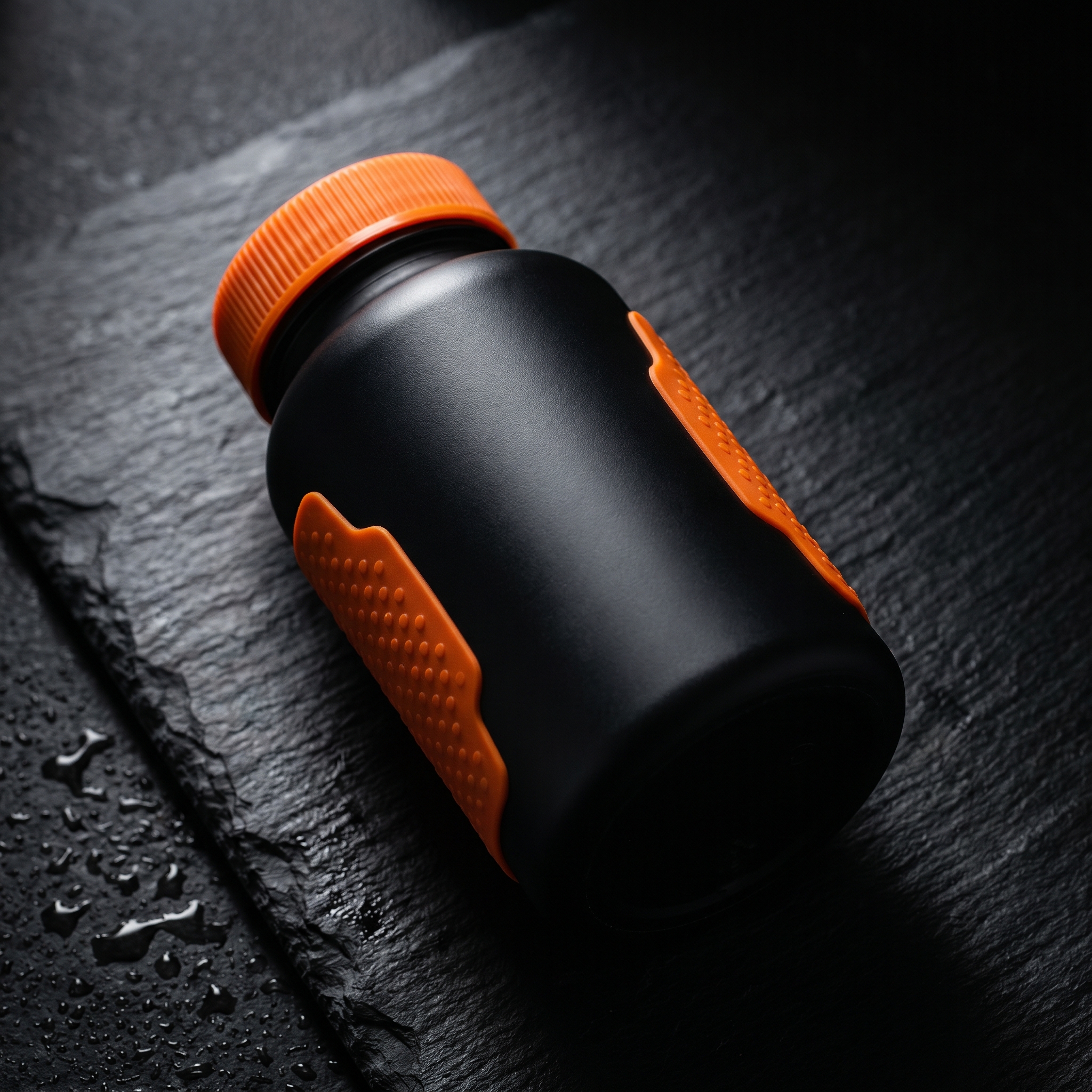
The only formula on the market that covers all three testosterone optimization pathways — LH signaling, SHBG reduction, and aromatase modulation — at the doses used in peer-reviewed trials.
- KSM-66 Ashwagandha 600mg — 15% T increase in 2019 double-blind trial
- Fadogia Agrestis 600mg — emerging LH pathway compound with two human trials
- Boron 10mg — 29% free T increase, 39% SHBG decrease in 7-day trial
- Zinc + Magnesium (ZMA) — depleted by exercise; correcting deficiency restores up to 25% T
Most testosterone support supplements are built around marketing budgets, not research. They use ashwagandha at 200mg (the effective dose is 600mg), boron at 3mg (the trial used 10mg), and often omit magnesium entirely. ApexT was built to match the clinical literature exactly — which is why it was formulated by a men's health physician who had watched his patients waste money on underdosed products for a decade.
Breaking Down the Formula
The most clinically studied adaptogen for testosterone — 22 human studies in KSM-66's proprietary research dossier. The 2019 double-blind trial in men with low-normal testosterone showed a 15% increase vs. placebo. Reduces cortisol by up to 30%, removing the primary upstream suppressor of the HPG axis.
The compound that put testosterone optimization into mainstream conversation. Two human pilot trials now published showing LH and testosterone increases. ApexT includes it at 600mg with complete ingredient transparency — the data is early but the mechanism is sound and the results are promising.
Chronically underrated. A published human trial showed a 29% increase in free testosterone and 39% decrease in SHBG after just 7 days of 10mg boron supplementation. Most products use 3mg. The difference between 3mg and 10mg is the difference between a cosmetic inclusion and a therapeutic dose.
The original natural testosterone stack — and still one of the most evidence-based. Both minerals are depleted by sweat, and men who exercise regularly are chronically deficient in both. Correcting the deficiency alone can restore testosterone by up to 25%. Magnesium also improves sleep quality, which independently affects testosterone production.
What Happened at 90 Days
"My total testosterone was 408. Doctor said fine. I did not feel fine. Started ApexT after a friend mentioned the boron research — something I'd never heard of. At the 90-day mark my bloodwork came back at 541. But honestly the number wasn't even what got my attention first. Morning erections came back for the first time in probably two years. Gym numbers started moving again. My wife noticed I was different before I'd told her I was taking anything."
"I'd tried three other testosterone boosters. Honest answer: expensive urine. Nothing. Did some reading on the actual clinical data and found ApexT had KSM-66 at the right dose and the 10mg boron, which no other product I'd found was doing. This one was different from day one — not a buzz, not stimulants. More like a fog lifting. Still taking it 14 months later. My wife says she'd notice if I stopped."
"I lift five days a week. Recovery was awful — I was sore for days and my strength hadn't moved in almost a year. My bloodwork showed testosterone at 392. 'Borderline normal.' I added ApexT for 60 days. Recovery cut in half — I'm talking noticeably. Hit PRs on deadlift and bench at the 8-week mark. Libido is back to what I'd expect at 38. The boron thing specifically is wild — I wish I'd known about that years ago."
A Realistic Timeline
Cortisol Drops, Sleep Quality Improving
KSM-66's cortisol-reducing effect begins within the first two weeks. Sleep quality — particularly deep sleep — improves noticeably, often the first change men report. Magnesium's effect on sleep architecture adds to this. Better sleep is itself a testosterone production driver.
Morning Erections Returning, Gym Recovery Better
This is when men typically report the first physical markers of improved hormonal function. Spontaneous morning erections — a reliable proxy for circulating testosterone levels — often return during week 3 or 4. Gym recovery time shortens noticeably.
Libido and Drive Measurably Improved
The full constellation of testosterone-related improvements starts compounding. Men report higher competitive drive, more consistent libido, and a general sense of being "back" that they hadn't realized was missing. Strength in the gym is progressing again.
Bloodwork Changes — Free T Visibly Higher
This is the optimal window for a follow-up blood panel. Men who test at 12 weeks — particularly those measuring free testosterone alongside total T — consistently report the most concrete before/after data. The boron-driven SHBG reduction means free T often improves more dramatically than total T.
ApexT® vs. The Alternatives
| Feature | ApexT® | TestoPrime | TestoGen | Basic ZMA |
|---|---|---|---|---|
| Fadogia agrestis included | ✓ 600mg | ✗ | ✗ | ✗ |
| KSM-66 (not generic ashwagandha) | ✓ 600mg | Generic, 668mg | ✗ Generic | ✗ |
| Boron 10mg | ✓ 10mg | 8mg | 5mg | ✗ None |
| SHBG-reducing stack | ✓ Boron + Zinc | Partial | Partial | ✗ |
| Free T optimization vs. total T | ✓ Explicit | Total T focus | Total T focus | ✗ |
| Peer-reviewed ingredient dossier | ✓ 22+ studies | Partial | Partial | Limited |
| Verdict | Most complete T formula | Good, missing fadogia | Underdosed across board | Foundation only |
May sale: Save $40 on the 3-month stack — limited to the first 500 orders. Free shipping on all multi-bottle orders.
Free shipping on multi-bottle orders. May sale — $40 off 3-month stack, first 500 orders only.
60-Day Money-Back Guarantee
ApexT® backs every order with a complete 60-day money-back guarantee. If you don't notice improvements in energy, recovery, libido, or morning function within 60 days of consistent use, contact support for a full refund — no questions asked, no return required. The 90-day bloodwork window extends past the refund period by design: men who see results early stay on it. Men who don't, get their money back.
Get ApexT® Testosterone Matrix
6,800+ men have put the clinical-dose formula to the test. The 3-month stack is $56.33/bottle — and the May sale saves an additional $40. Once the first 500 orders are in, this price is gone.
Claim My 3-Month Stack — $16960-day money-back guarantee · Free shipping on bundles · May sale ends soon